Interview with Rainer Dittrich – Director of the Ostsee Casinos
ISA-CASINOS talks to Rainer Dittrich, director of the Ostsee casinos in Heringsdorf and Stralsund. Rainer Dittrich is 47 years old, married and the father of three children.
Set in one of the most beautiful holiday landscapes in Germany, on the island of Usedom, the Heringsdorf casino forms a significant tourist attraction.
Built as one with the large Kursaal of the three Kaiserbäder and the conference and wellness centre of the MARITIM hotel, the Heringsdorf casino is the starting point of many cultural and social highlights in the region.
Following the charm of Hanseatic brick Gothic and the unforgettable seafarer Störtebeker, the Stralsund casino offers entertainment with a maritime character.
Centrally located in the Hanse Center at the main railway station, this casino aims at an urban as well as a tourist public.
As a nod to the Hanseatic city, whose old town was declared a World Heritage Site in 2002, the casino will open next year in the historic heart of the city, at the Neuer Markt.
Reinhold Schmitt: What is your role today?
Rainer Dittrich: Management of the Heringsdorf and Stralsund casinos.
Reinhold Schmitt: Are you active in other areas of the casino industry as well?
Dittrich: No.
Reinhold Schmitt: If you have worked in the casino sector for some time: where do the most striking changes lie?
Dittrich: I have worked in casinos since 1978. The most striking change in casinos certainly lies in the triumph of the automation of gambling and of its monitoring. This goes hand in hand with a significant change in the entertainment on offer and in the casino public.
Reinhold Schmitt: Which games are offered in your casinos?
Dittrich: The range of games is identical in both houses: blackjack and American roulette as the classic game, the latest slot machines and large roulette terminals, as well as various jackpots in slot play.
Reinhold Schmitt: There is constant talk of the high casino density in Europe. Do you believe that all casinos in Switzerland can survive economically despite the partly poor start?
Dittrich: As we can already see at present, not all Swiss casino locations are economically viable. Casinos offer a very special service, and the danger of offering something that misses the real and calculable demand is very great, and not only in Switzerland.
Reinhold Schmitt: How do you assess the first results of the new Swiss casinos?
Dittrich: The first results of the Swiss casinos did not surprise me. The casinos in the immediate catchment area of populous and economically attractive cities were able to show their profit margins, whereas the small locations geared to seasonal tourism have missed their targets by a wide margin. In that respect the Swiss results also reflect the German casino reality, in that the casino business has long since ceased to be a self-runner and, especially today, location questions must be handled with considerably greater foresight.
Reinhold Schmitt: How do you assess today's casino landscape?
Dittrich: In the foreground is the difficult task of keeping the casinos' existing market shares and expanding them further. The laborious transformation of German casinos from a place of elitist and privileged social gathering into relaxed entertainment for everyone now seems to be complete. Today casinos face sharper competition from the most varied lotteries, sports betting and chain-letter schemes, right through to amusement arcades. Casinos employ their own marketing departments and increasingly try to act as event agencies. Today's casino landscape is therefore truly in motion. The offer of licensed gambling alone is no longer enough to run a casino successfully.
Reinhold Schmitt: Do you see ways of increasing the attractiveness of gaming venues, including through changes on the part of the legislator?
Dittrich: Themed venues can, under certain circumstances, promote attractiveness if the surroundings of the location allow it. The legislator could influence a possible increase in attractiveness if, for example, it gave the operating companies more say in choosing locations, loosened its gambling monopoly so that, say, sports betting could be integrated into the casino business, and reduced the levy rates to a level that generally allows the operating companies more investment.
Reinhold Schmitt: Slot games are becoming ever more popular simply through their technical innovation. Is the classic game no longer attractive?
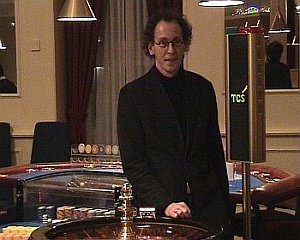
Dittrich: In its present form the classic game has certainly passed the peak of its popularity noticeably. It increasingly has a museum-like character and has lost entertainment value, especially in comparison with the machines. There are various reasons for this: on the one hand on the side of the audience, with their constantly changing ideas of amusement and fun, and on the other on the side of the casinos, with their difficulties in adapting to these changes, particularly in the classic game department. Machines I can rebuild and update at any time; the tradition of the classic game and the staff that go with it do not allow that at this pace.
In the houses of the Ostsee casinos the machines generate around 80% of the total gross gaming revenue. This result stems from a balanced strategy of constantly updating games and technology on the one hand, while preserving a certain continuity of individual game types on the other. Not every slot innovation goes down equally well at our locations; regular guests sometimes follow their habits, whereas first-time visitors often look for novelties.
Reinhold Schmitt: Do branch operations have a future?
Dittrich: Branch operations have a future above all when they can be opened where a recognisable demand already exists or can be created in the medium term. Casinos must become more flexible in general. The presumed basic need to play can be satisfied today in so many ways that more attention must be paid to decision factors such as travel time and distance.
Reinhold Schmitt: Tournaments are an attractive special, for example poker or blackjack. However, fewer and fewer interested people take part. Many complain about the excessive entry fees in Europe. Do you see a need for action here?
Dittrich: The balance between entry fee, winner's prize and service during the tournament increasingly decides the success of a gaming competition. Even small casinos certainly have their chance there. Overloaded tournament rules or an excessive duration spread over several days, on the other hand, are harmful.
Reinhold Schmitt: Well-trained staff is the non plus ultra in the casino sector. What do training and further education of your employees look like?
Dittrich: With the manageable number of staff in the Ostsee casinos, ongoing motivation of performance and improvement takes place on a very personal level. In addition, self-control within small departments is considerable. Beyond that, we also make use of the findings of external observers who assess the quality of our services at irregular intervals. The results of these quality checks are the starting point for our training programmes.
Reinhold Schmitt: The economic downturn has so far not been brought to a halt. To what extent are your casinos affected as well?
Dittrich: Driven by rising tourism in Mecklenburg-Vorpommern, the Heringsdorf casino was able to increase gaming turnover and earnings slightly this year. The Stralsund casino fought first against tangible location problems and only then against the negative economic trend.
Reinhold Schmitt: The internet now occupies a significant place in the flow of information for consumers. What are your activities here?
Dittrich: Our aim for our internet presence is "informing is advertising". Our emphasis is therefore more on up-to-date information and less on design, and consequently we create our homepage ourselves. The close cooperation with the ISA-CASINOS platform has multiplied the visits to our site. Enquiries, especially about our casino packages, have increased, so that next year we will appear even more intensively as an entertainment and event organiser.
Reinhold Schmitt: What is your view of the online casino, and would you also pursue activities in this area?
Dittrich: I do not consider any activities worth supporting that offer a casino to the whole world via the internet but in which only the residents of a single town in Germany may play. Such approaches are paradoxical both politically and technically. Incidentally, I do not consider virtual casinos serious competition for real casinos as long as we succeed in lastingly conveying to our public the social and atmospheric pleasures of gambling in a casino.
Reinhold Schmitt: More and more casinos are also facing up to the problem of gambling addiction and thereby living up to their social responsibility. What activities do you support in this respect in your company?
Dittrich: Among our staff we have a qualified psychologist who is intensively familiar with the subject of gambling addiction. This gives us the opportunity to approach the person concerned quite individually in the case of obviously problematic gambling behaviour. In the case of self-exclusions we generally offer applicants an appointment for a conversation so that they can inform themselves in a professionally competent and problem-oriented way. We are pleased at how often this offer is taken up.
Reinhold Schmitt: With the terms "casinos" and "gaming houses", consumers associate not only the ambience but also the luck of the big win. Which large payouts that your guests received do you remember?
Dittrich: I particularly like to remember an elderly lady who cracked a jackpot of 30,000 euros in Heringsdorf and spontaneously used the winnings as a down payment to buy a holiday flat in the town. She now comes to visit us regularly in summer.
Reinhold Schmitt: Casinos are associated on the one hand with a glittering ambience; on the other, horror stories about unacceptably high losses leave visitors with negative impressions. In your opinion, what should be done to bring the inner workings of casinos closer to the public?
Dittrich: Especially during the season we sometimes hold introductory events daily, at which not only are the houses shown and the games explained, but the guest also gets an overview of the history of the casino and of gambling. These events have been very well attended for years and now and then also reach the local press. To break down fear of entering, public relations is very important. A remainder of the casino myth, however, we cultivate quite deliberately.
Reinhold Schmitt: Until a few years ago a strict dress code applied when visiting casinos. Although it has since been relaxed, most houses still place great value on formal evening wear today. How do you see this?
Dittrich: Young casinos suffer less from the constraints of old traditions. In that respect we relaxed the dress code in our houses from the outset so that a casino visit was possible in smart leisure wear, that is without tie and jacket. We have had good experiences with this and were also able to establish that the majority of the public quickly adapts its wardrobe to the ambience and style of the house anyway.
Reinhold Schmitt: What comes to mind spontaneously when you think of amusing incidents during your work?
Dittrich: I was particularly amused in February 2002 with a roulette table in the middle of the Baltic Sea and, all around me, intrepid ice swimmers playing roulette with a single die at 4 degrees water and 6 degrees air temperature.
Reinhold Schmitt: If you had three wishes, apart from wealth, what comes to mind spontaneously?
Dittrich: Health, a fulfilling circle of family and friends, and good business at all times.
Reinhold Schmitt: What does your leisure-time balance look like?
Dittrich: I like the fact that work and leisure quite blend together. Good conversations, whether private or business, are just as welcome a balance as the odd interesting book. I love the cinema and like to travel. The cultural seclusion of my locations in Mecklenburg-Vorpommern I perceive again and again as a burden.
Reinhold Schmitt thanks him for the conversation.
Sources
The facts were checked against the following sources:
- Inclusion of the Historic Old Towns of Stralsund and Wismar in the UNESCO World Heritage List on 27 June 2002 (26th session of the World Heritage Committee in Budapest): https://www.regierung-mv.de/Landesregierung/wkm/Kultur/Sparten/Welterbe/
- Recognition of the old towns of Stralsund and Wismar by the UNESCO World Heritage Committee on 27 June 2002: https://www.baulinks.de/webplugin/2002/0566.php4
- Heringsdorf casino on Usedom, opened in 1998 in the Forum Usedom on the Kaiserbad promenade: https://www.nordkurier.de/regional/usedom/hat-das-heringsdorfer-casino-noch-eine-chance-1265184
- The details on his person and career, the range of games, revenue shares, location plans in Stralsund, jackpot payout and assessments come from the ISA-CASINOS conversation at the time and can no longer be independently verified today.