Interview with Prof. Jörg Häfeli – lecturer and project leader at the careplay competence centre for gambling addiction prevention
Casinos profit from the stakes of the players. Casino visitors who are not stable then fall into a state of euphoria and overestimate their ability to play. Legal requirements oblige casinos to take measures for the prevention of gambling addiction. Today we are talking to Prof. Jörg Häfeli, lecturer and project leader at the Swiss "careplay – competence centre for gambling addiction prevention".
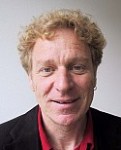
Prof. Jörg Häfeli (48) is a lecturer and project leader. The married father of three daughters retrained as a social worker after working as a businessman in an international company. His many years of experience in addiction counselling and his studies in organisational development were the basis for his work, now in its fifth year, as lecturer and project leader at the Institute of the University of Applied Sciences for Social Work in Lucerne, Switzerland.
Reinhold Schmitt: Mr Häfeli, for most people, whether inside or outside casinos, gambling addiction is a loaded word. Those affected deny it; those not affected ask about the "risk of contagion". What exactly do you mean by gambling addiction?
Prof. Jörg Häfeli: Gambling addiction is characterised by the following indicators: gambling for money has become a central focus of life. Everyday thoughts and activities are fixed on gambling and on the procurement of money that goes with it. The consequences are above all debt and withdrawal from important social relationships. In our experience, gambling addiction develops over several phases and has many causes. The mere existence of gambling offers is only one piece of the puzzle in the development of an addiction.
Reinhold Schmitt: What is the legal situation in Switzerland?
Häfeli: Last year the Swiss Federal Council granted 22 operating licences. These companies are all subject to the same law.
At its highest level the law states that its purpose is, among other things, to prevent the socially harmful effects of gambling. The implementing provisions then require the operators of a casino to have a social concept, which must be put into practice. In short, the social concept comprises:
- cooperation and networking with prevention agencies
- information brochures on the risks of gambling, including a self-test and details of further help
- training and further training of staff to identify problem gamblers early and to approach guests; these courses are refreshed every year and deepened in exchange groups
- measures such as exclusions from gambling (self-requested and ordered)
The exclusions are electronically linked across all Swiss casinos. We do not have registration on entering a casino in Switzerland; however, you have to show identification at the entrance. And that is when it is checked whether someone is barred or not.
Reinhold Schmitt: How is your institute / department organised, and who finances the project?
Häfeli: We are a university institute of the Central Switzerland University of Applied Sciences. One of our focus topics is prevention. In this context we have developed over the last few years into a competence centre for gambling addiction prevention. On behalf of three large casinos (Baden, Bern and Lucerne) we advise the companies on implementing the social concept, which we developed three years ago. The training and further training of staff and the collection of data to measure effectiveness are a further focus of this mandate. This service is financed by the casinos. The further development of our know-how in "responsible gambling" is our own investment.
Reinhold Schmitt: You work preventively. What measures have you already put in place, and are first successes visible?
Häfeli: The first step was developing a company policy that gives due weight to the duty of care. Only what the management explicitly demands can be put into practice by casino staff in daily work. Here a company is challenged to find a realistic balance between business, that is financial, interest and social responsibility. What appears here to be an insoluble contradiction is in fact a major challenge for management.
On this basis we have trained more than 500 employees. The programme is graded by function. It is not the croupier, for example, who talks to the guest, but the table or floor manager. The croupier, however, knows very well the signals that may point to a guest being at risk of addiction. He is made aware of them, and he must know what to do with these observations.
Half a year is too short a time to make statements about successes. But the staff's great willingness and keen interest in this topic can be seen as a good basis for a successful implementation of the social concept.
Reinhold Schmitt: Casino employees have to act very attentively. Are they not overburdened by also having to watch for signs of gambling addiction in participants?
Häfeli: Croupiers tell us the opposite: they experience this "additional task" as an enrichment of their job. It is rather a burden for them to watch a guest's critical development without being able to act. They also know that it is a question of their industry's image. Are they now the rip-off merchants of the nation or providers of an entertainment offer? Only, this process of corporate understanding in this area will not bear fruit overnight. Among other things, it presupposes that salaries do not depend for their very existence on tips.
Reinhold Schmitt: What measures should casino employees take when necessary?
Häfeli: Croupiers are not supposed to become social workers. They can intervene at an early stage of a possible development of addiction. Our experience shows that many people appreciate this attention and have in some cases brought their gambling behaviour back under control. For others it is better to have themselves barred for a certain time, and for some only a ban by the casino remains. It is important that information on treatment options is available. We see these measures as part of customer orientation and of a modern guest service in a casino.
Reinhold Schmitt: Not only the players are affected but also, and especially, their relatives. Do you see the need for action covered here, or can you imagine further ways of giving help to this group as well?
Häfeli: Mostly it is relatives, as a rule women, who are under the greatest pressure. They are the first to seek help. An expansion of specialised counselling centres for gambling addiction is absolutely necessary. More self-help groups would also be very valuable here. As a rule, self-help groups always come into being in cooperation with a counselling centre. Online counselling and the exchange of experience on the internet are further good forms of support.
Reinhold Schmitt: ISA-CASINOS has set up a forum in which gambling addiction can be discussed. Could you imagine also taking part and answering questions in this forum?
Häfeli: Just these days we have launched our own forum in Switzerland (at www.careplay.ch). We know the Swiss situation very well. In that respect it is better if people who know the German scene take part. Of course I always look at this forum, and if I can contribute something, I will.
Reinhold Schmitt: Switzerland is not only Germany's neighbour but is also very active on the legislative side when it comes to gambling addiction prevention. Your knowledge in dealing with gambling addiction would surely be very welcome to German partners too. What are your efforts here?
Häfeli: In the technical side of gaming, Switzerland was able to benefit greatly from German know-how. In the area of player protection measures it is perhaps the other way round. During the licensing procedure in Baden-Württemberg we advised the Stuttgart casino in this area. Apparently the far-reaching prevention concept played an important role for the political bodies when the licence was awarded to Stuttgart for Baden-Baden and Konstanz.
In Hamburg we are in close contact with the local addiction prevention agency, which in turn works with the Hamburg casino. Together with them we are offering a seminar on cooperation between prevention agencies and casinos at the Hamburg Addiction Therapy Days in June 2003.
We are interested in offering our services internationally.
Reinhold Schmitt: You have worked a great deal on the subject of addiction prevention in the past. What wish would you have fulfilled if you were given a one-off chance here?
Häfeli: The three main players in the gambling sector – the state, the companies and the players – should face up to their social responsibility more. In gambling everyone wants the highest win, each from his own interests. What is missing is an overarching policy that takes more account of social and thus societal responsibility.
Reinhold Schmitt thanks him for the conversation.
Sources
The facts were checked against the following sources:
- Prof. Jörg Häfeli, lecturer and project leader at the Lucerne University of Applied Sciences and Arts (Social Work), specialist talks on gambling addiction, prevention and early detection: https://www.gr.ch/DE/Medien/Mitteilungen/MMStaka/2010/Seiten/2010021102.aspx
- careplay, social concept developed by the Lucerne University of Applied Sciences and Arts – Social Work for the prevention and early detection of gambling addiction in casinos: https://www.socialnet.de/branchenbuch/2438.php
- The details on age, family, professional background, the number of licences, training figures, clients and the plans for 2003 come from ISA-CASINOS' conversation and report at the time and can no longer be independently verified today.