Interview with Hartmut Nevries – Managing Director of the Ostsee Casinos
ISA-CASINOS talks to the managing director of the Ostsee Casinos (Spielbank Heringsdorf and Spielbank Stralsund), Hartmut Nevries. He is 63 years old, married and the father of 2 children.
Set in one of Germany's most beautiful holiday landscapes, on the island of Usedom, the Spielbank Heringsdorf is a significant tourist attraction. Its location amid "imperial" spa architecture on the beach promenade of the seaside resort of Heringsdorf gives this casino its classic character. Forming an architectural unit with the large spa hall of the three Imperial Spas and the conference and wellness centre of the MARITIM hotel, the Spielbank Heringsdorf is the starting point for many cultural and social highlights in the region.
Following the charm of Hanseatic brick Gothic and the unforgettable seafarer Störtebeker, the Spielbank Stralsund offers entertainment with a maritime character. Centrally located in the Hanse Center at the main railway station, this casino targets an urban and a tourist audience alike.
Reinhold Schmitt: Mr Nevries, since when have you been in the gaming business?
Hartmut Nevries: It started in 1970 in the organising committee for the 1972 Olympic Games in Munich, when we were thinking about how the Games could be financed and, together with the German lottery block, invented and organised the "Glücksspirale". This very successful lottery co-financed not only the Olympic Games but also the expansion of the stadiums for the 1974 Football World Cup and, to this day, many charitable and sports-policy goals. It continued in 1978 at the "Westdeutsche Spielbanken" in Münster as head of the department for "Marketing, Administration and Ancillary Operations". The path then led me from North Rhine-Westphalia to neighbouring Lower Saxony, where from 1982 I was first second managing director and later sole managing director responsible for the casinos in Bad Bentheim and Bad Zwischenahn, and later also for the North Sea casinos Norderney and Borkum.
Reinhold Schmitt: What position do you hold today?
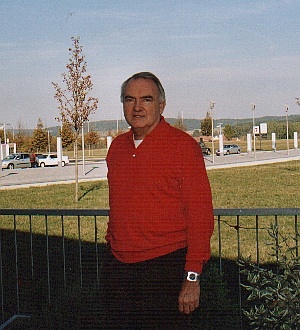
Hartmut Nevries: My current position is that of managing partner of the "Ostsee-Spielbanken" (Heringsdorf and Stralsund), chairman of the supervisory board of the Czech casinos in Železná Ruda and Folmava, and member of the supervisory board of the casinos in Saxony-Anhalt (Magdeburg and Halle). In addition, I am vice-president of the "European Association for the Study of Gambling" (EASG), an international organisation with members from 28 European and non-European countries, which is dedicated to researching gambling, its risks and opportunities, but also its economic significance, and which holds major international congresses in a member country every 2 years. Incidentally, the next conference will take place in 2005 in Malmö, Sweden.
Reinhold Schmitt: Which games are offered in your houses?
Hartmut Nevries: In our German casinos it is American Roulette and Black Jack as well as the entire range of technical games of chance; in the Czech houses there are also Poker and Punto Banco, for which there is no demand on the Baltic coast.
Reinhold Schmitt: What makes your casinos special?
Hartmut Nevries: The Ostsee Casinos in Heringsdorf and Stralsund are not the largest in the country, but they stand out for their good location right on the Baltic Sea, their maritime ambience and – as guests keep emphasising – our very friendly staff.
Reinhold Schmitt: In your opinion, has market saturation for casinos in Europe been reached?
Hartmut Nevries: In some countries certainly yes, for example in Great Britain with over 160 casinos, France with over 150 and Germany with 50 casinos and 25 slot halls, but Finland has only one and Italy only 4 casinos. The problems in Switzerland with 21 new licences alongside existing casinos in the neighbouring countries are already becoming clear: the expected turnover figures are not being reached, the range of games is being reduced and, regrettably, staff are being laid off. I believe this question can only be seen in connection with the entire range of legal gambling on offer, which is still showing growth rates in almost all European countries, but is also already revealing "cannibalisation effects". The state in particular should limit itself to its core competence, the control of licensed gambling and the channelling of existing games of chance, and not constantly permit new games of chance in order to fill budget gaps with new gambling taxes. In some countries the revenue from gambling already covers 5 % of the national budget, and in Germany the tax revenue from gambling is not exactly small either. It amounts to approx. 6 bn euros, of which almost 800 m euros come from licensed casinos alone.
Brussels, as the seat of the EC, is remarkably reticent on the subject of gambling and does not yet seem to see any need for regulation or harmonisation, after the first attempt in 1991 failed due to the objection of all member states. This question may be taken up again in connection with "e-gaming" on the Internet. At present the principle of subsidiarity also applies in Germany, i.e. each federal state does what it considers right in terms of taxation, the range of games, regulations and rules of order. And here the views among the nations differ greatly.
Reinhold Schmitt: Slot games are becoming more and more popular through their technical innovation alone. Are the classic games no longer attractive?
Hartmut Nevries: The development of technical games of chance has indeed exploded in recent years, and the innovations take account of our customers' gaming ambience, while the classic table games have changed only marginally in the last 250 years. In our fast-moving times they may seem boring, slow and lacking visual animation. When you also see how in many casinos these games are presented indifferently and without commitment, and how inexperienced casino visitors are lectured and smiled at instead of being helped, you cannot be surprised at the economic decline of this segment. Personally, I hold on to the classic games of chance and, together with the staff, always think about how these games can be presented more attractively and better in order to create more enjoyment at the tables.
Reinhold Schmitt: Slot machines follow trends. Do you think it makes sense to keep adapting to new generations, or are playing habits more important?
Hartmut Nevries: Slot machines were introduced into the casinos' range in 1977 in Lower Saxony, namely in Bad Zwischenahn and Bad Bentheim. German casino directors regarded the "one-armed bandits" in the sacred halls of their casinos as sacrilege. We were smiled at and insulted because we broke with the French tradition of classic casino gaming. Today no casino in Germany could survive without slot machines, given the high levies. And this only because slot gaming has always adapted to the wishes of the players and to the need for exciting entertainment, thrills and high financial risk. Not every new generation immediately triggers a trend. The player notices at once which machines best match his individual desire to play and his adrenaline rush. When the first feature machines came onto the market, they surprised with their high results. The bonus games offered previously unknown chances of winning. "Hand-pays", i.e. payouts above the machine limit – formerly rather a rarity – became common practice and completely changed "cash handling" in slot gaming. With payouts by hand, the casino found a new source of income that had been threatening to dry up: tips. Today, in many a slot hall, not only considerably more gross gaming revenue but also considerably more tronc is taken than in the so-called classic games.
The new machines are not only more colourful and more stimulating, unfortunately they are also much more expensive than earlier generations of machines, although their inner workings consist only of a few printed circuit boards, random number generators and EPROMs. Since our levies to the federal state have not been reduced, the more expensive machines would, from a business point of view, also have to stay "in operation" longer. From a marketing point of view, however, this is not possible, because you would soon have an outdated machine park that would offer players less animation, and success would decline. If you compare the results of several comparable slot locations today, you find considerable differences. Often, however, the deficit is noticed too late, because the result still covers the costs, but not the reserves for new machines. The latest generation of Novo Multi-Roulette or the fully electronic Touch Bet roulette machines or the Money Train group involve investments of 150,000 – 250,000 US dollars. Because of their high payout rate (over 95 %) they are highly interesting for the player, while for the casino operator they only pay for themselves and become profitable in the long term, due to the high levies and to the fact that these high investments can only be written off over many years and do not reduce the casino levies. Here a smaller casino in particular, which has to have these machines for competitive reasons, gets into a situation where the machine is played well but does not cover its costs. Ultimately, only large casinos with many visitors can offer the full range of these innovative but also high-priced machines. The smaller ones fall behind, comparable to the corner shops next to the ultra-modern supermarkets.
Reinhold Schmitt: Do you see any ways of making gaming venues more attractive, including through changes on the part of the legislator?
Hartmut Nevries: The key figure in the interplay between casino operator and casino visitor is the legislator, with its casino levies and gaming regulations. The formula is very simple: if the casino levies are constantly raised – as is unfortunately the trend at present – because the legislator takes no account of the negative tronc situation, the personnel costs, the ever-increasing technical costs for the technical games of chance just described and the necessary marketing costs of the casinos, then the casino operator, in order to survive, has to save on attractiveness, service and the range of games, right down to opening hours. If we compare the levy rates in Germany with those of our neighbours in Holland, Belgium, France and Austria, then you have an explanation as to why far more can be done for the guest in the casinos of these countries than in Germany. The levies are much lower. That is why we also lose many guests who are mobile enough to our neighbouring casinos. The German legislator's demand to skim off the casino operator's profits "up to the limit of economic viability" is handled very differently across the German states, since very many casinos are run by the state itself or by state-owned companies.
Fortunately, there are encouraging approaches in some federal states, where it has been recognised that lower taxation has led to more attractiveness, more visitors and ultimately a better result for everyone involved. Today it is simply no longer enough to set up a few gaming tables and a couple of old machines and wait for the masses to stream in. Casinos compete with amusement arcades on the one hand and, on the other, with many state-licensed legal games of chance such as Lotto, Toto, Oddset, bingo and other sports betting, but also with the many thousands of ways to play and bet in print media, on almost all TV channels and now also, although not legally, on the Internet.
The citizen of 2003 has 20 times more opportunities to "try his luck" in the legal sector alone than 20 years ago. Casinos are immobile; they have a limited offer that always stays the same. The rules are internationally standardised, and stakes and chances of winning are the same. We compete with changing markets, changing consumer habits and trends, which we have to meet with products that lie outside the pure gaming offer. Casinos are moving from spa houses to shopping centres; they surround themselves with places that attract many people, such as shopping centres, theatres, musical halls and even airports. That is, they no longer wait for visitors in spa parks, but go where their potential guests already are. Their audience no longer consists of bored spa guests from Europe's high nobility or money dynasties. Their audience is a cross-section of all age groups, occupations and levels of education, of both sexes. For them an offer suited to the times and the market has to be "carved out".
The attractions and the courting of an attractive audience include casino-specific competitions and tournaments, which have developed inflationarily because every casino believed it had to secure a slice of this "high-roller" cake. Because almost everyone does it by now, the individual attractiveness has fallen, just like the prize money and the quality of the participants. The casinos in Germany and elsewhere in Europe have realised that tournaments increase their media presence, but also the costs associated with the tournament. If you want to become known or improve your image, you should hold richly endowed tournaments; if you want to make money, you should concentrate on your own regular audience.
Reinhold Schmitt: The economic downturn has not yet been brought to a halt. To what extent are your casinos also affected?
Hartmut Nevries: We had indeed grown used to annual growth rates in the 2-digit range and were surprised that in 2001 this growth trend was abruptly stopped for the first time. The shock of the attacks of 11 September 2001 in New York had its effects not only in America but also in Europe, with regard to leisure behaviour, consumer behaviour and holiday habits. The introduction of the euro, the complete collapse of the "Neuer Markt" and the associated billions in losses on the stock exchange did the rest to make the casinos' result curves bend downwards. Probably everyone was affected to a greater or lesser extent. More affected were the smaller casinos in tourist areas, like ours on the Baltic Sea, with on average 5 % less revenue from the slot machines and 15 % from the table games. We hope that this downward trend will reverse again next year; we are already seeing the first signs of this in the 3rd quarter of this year.
Reinhold Schmitt: What competition do you feel from online casinos, and what danger do you see in this form of gambling?
Hartmut Nevries: The Internet holds huge opportunities for intercontinental and thus international data traffic, the trade connected with it, the transmission of news and direct and easy access to all fields of knowledge. Unfortunately, where there is a lot of light, there is also a lot of shadow. The Internet is unfortunately also used by persons and institutions who want to harm and exploit people. Gambling on the Internet is one of the endangered areas which, if the wrong people are behind it, can very easily be abused. The possibility as such of also using the Internet for entertainment and gambling is not reprehensible. However, it should take place according to rules that do not harm, exploit or blackmail the user. These rules would have to be agreed internationally, i.e. within communities of states, because worldwide networking does not stop at national borders. Control is, as we can read in the press every day, extremely difficult, and Germany in particular finds it especially hard here, because it wants to apply particularly high standards in its need for regulation. As a result, German operators, at least in our industry, are put at a considerable disadvantage compared with other providers from abroad and are hindered by prohibitions in many developments. I see this as the greater danger than that of abuse, because every user of such offers will ultimately prefer the provider who runs the game fairly and transparently and not the one who "cheats". For this reason my company supports the development of an online platform under a trustworthy name together with several German casino companies, in order to rule out ruinous competition among ourselves. The joining of the majority of German casinos in a joint presence is a good way, also against the background that we are surrounded by large international companies elsewhere in Europe.
To what extent our land-based casinos will suffer from this remains to be seen; I do not venture any forecasts or speculation here, nor in the area of the financial success of e-gaming. We use all the possibilities of the Internet for communication and information, with the exception of direct play. In this connection I would like to give great praise to ISA-CASINOS, because the daily updates keep us very well informed, and not only about jackpot wins, but also about critical reporting on our industry.
Reinhold Schmitt: What comes to mind spontaneously when you think of amusing incidents during your career?
Hartmut Nevries: Dealing with people every day brings "amusing incidents" almost every day. It is difficult to single out one particular incident. We had a visit from a group of novices (trainee nuns) from a neighbouring convent who wanted to see the casino, that temple of sin, for themselves. I welcomed them with due respect, showed them the gaming rooms and the games on offer, and afterwards each novice was given a coin so that she could personally shake hands with a "one-armed bandit". None refused. Each gladly took the opportunity to try her luck. Was it chance or divine providence – one convent pupil won 500 DM, gave thanks with the remark that this was a sign from heaven, and I was assured that this visit had indeed served a better understanding. Next time I will report on the cut-off ears in our casino Dschingis Khan in Ulan Bator in Mongolia.
Reinhold Schmitt: How do you comment on the closure of the online roulette at the Spielbank Hamburg?
Hartmut Nevries: The President of the Hamburg Constitutional Court did not make the decision on the judicial review application by 50 members of the GAL and SPD groups in the Hamburg parliament (Bürgerschaft) lightly, and in the reasons for the judgment clearly emphasised that protecting players from criminal exploitation and from ruinous gambling has priority. In the Constitutional Court's opinion, this protection can be better guaranteed in a "real casino" than by taking part in the game via the Internet. This example clearly shows how much educational work still has to be done by the Hamburg casino to take away the fear of using the Internet. It is precisely the Internet that turns the anonymous player into a completely transparent participant, whose identity and course of play are documented traceably at every step. Every move, every stake, every win or loss is recorded, in contrast to the behaviour of a natural player at a gaming table or a machine in the Spielbank Hamburg. The precondition, of course, is that the details of the "Internet player" can be checked and that every deception, however clever, on the part of the Internet participant is uncovered. Knowing the security and control checks of the Hamburg casino, I assume this to be the case. Perhaps this could not be made sufficiently clear to the court and to the members of the Hamburg parliament who brought the action, behind whom there are certainly interest groups. It strongly reminds me of the comments on the first automobile, which was given no great future because it was considered too dangerous for the ordinary pedestrian. The development is well known.
Reinhold Schmitt: Thank you very much for the interview.
Sources
The facts were checked against the following sources:
- Hamburg Constitutional Court (Hamburgisches Verfassungsgericht), judgment of 21 October 2003, HVerfG 10/02, on the online roulette of the Spielbank Hamburg (application by 50 members of the Bürgerschaft): https://gluecksspielsucht.de/materialien/VerfGHamburg.pdf
- casino.org, “Glücksspiel in Italien: Die Sorgen der Casinos Sanremo und Campione” (Italy's four casinos): https://www.casino.org/de/nachrichten/italiens-casinos-sanremo-und-campione-in-sorge/
- The statements in the interview come from Hartmut Nevries himself and can no longer be fully verified today.