Interview with Bernhard Stracke – ver.di Federal Coordination of Casinos
Reinhold Schmitt: Mr Stracke, at the United Services Union – ver.di – you coordinate the casino sector nationwide. Did you ever stand at a roulette table yourself as a croupier, so do you come directly from the casino industry?
Bernhard Stracke: No, but I have looked after the casinos in Rhineland-Palatinate and the Saarland since 1983 and have been conducting collective bargaining in this field for just as long. I very much enjoy working with casino employees. I can say of myself that I have worked my way well into the subject and have very good knowledge of the industry.
Reinhold Schmitt: What is your role today?
Stracke: I work in the Rhein-Nahe-Hunsrück district, based in Mainz, in the financial services sector, where I am deputy district manager. In addition, I coordinate ver.di's work in the casino sector at federal level.
Reinhold Schmitt: Is ver.di the only employee organisation that represents the interests of croupiers and other casino staff?
Stracke: Yes, with the founding of ver.di and the dissolution of HBV and DAG, ver.di is the only trade union in the casinos.
Reinhold Schmitt: Of the roughly 4,500 to 5,000 people employed in casinos nationwide, how many are union members?
Stracke: ver.di has organised just under 3,500 members in the casinos.
Reinhold Schmitt: Within the ver.di union, casinos are assigned to the "Financial Services" sector. This sector is dominated by banks and credit institutions and by the insurance industry. Although large sums of money are still wagered in casinos every day: would the "Special Services" sector not be the more suitable one – after all, the casino industry sees itself rather as a "personal service provider to the guest"?
Stracke: When ver.di was founded, 13 sectors were set up. When it came to assigning the casinos, the "Special Services" sector was also considered. The work so far has shown that the casinos are well placed in the Financial Services sector. There are casinos that have a connection to the financial services industry, for example Westspiel and Spielbank Schleswig-Holstein.
Reinhold Schmitt: If you are responsible for coordinating employee interests across the country, do you, for instance in collective bargaining, also have to deal "on the other side" with a kind of "employers' association of German casino operators"?
Stracke: No, there is no employers' association. All collective agreements in the casino sector are company agreements. We negotiate the agreements in the individual casinos with the respective employers. In June 2002 the casino employers founded the Deutsche Spielbanken Interessen- und Arbeitsgemeinschaft (DeSIA). ver.di made three attempts to start talks with DeSIA's representatives. However, this was rejected by the association's representatives. The reason given was that DeSIA is not an employers' association and does not conduct collective bargaining policy.
Reinhold Schmitt: If no such association exists on the employer side: would you welcome the creation of one, and might union goals be pushed through more effectively that way?
Stracke: In today's times it would certainly be an advantage if minimum framework conditions could also be agreed in the casino sector. In my view that would only be possible with an employers' association that would have to operate at federal level. Since pay in most collective agreements is still made through the tronc, the details would still have to be agreed in each house.
Reinhold Schmitt: It is no secret: the poor economic situation does not stop at the casinos either; there are troubles everywhere. Whereas it used to be said "times may be bad – people always gamble!", double-digit growth rates in gross gaming revenue and profit seem to be gone once and for all. In such an environment, what is the union's priority: improving working conditions, pushing through pay rises, or securing jobs with all its might?
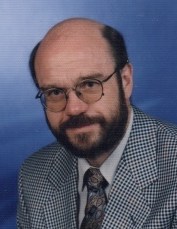
Stracke: Certainly, job security has a high priority for employees in today's times. This applies in particular to employees in live gaming. Through the changes to tax-free supplements and the decline in tronc payments, employees have already had to accept considerable pay losses in recent years. Since every collective agreement has to be looked at individually, ver.di's task, alongside safeguarding basic union positions, is to agree the right "mix" with the respective casino operator.
Reinhold Schmitt: What moved you at the end of last year to take such a sharp stance against considerations for a new casino, and thereby also for the creation of further jobs, in Frankfurt city centre?
Stracke: Casinos are not commercial businesses. Casinos have the state mandate to contain illegal gambling and to give people state-supervised opportunities to engage in it, so that the natural passion for gambling is protected from criminal exploitation. It cannot be that an entrepreneur who plans to build a centre also plans a casino to increase the attractiveness of the location. In our view we have a sufficient range of gaming today. This also applies to the Rhine-Main region. A new additional casino would only lead to a shift of gross gaming revenue and, overall, would not create more jobs.
Reinhold Schmitt: By contrast, you have no objections to plans for casinos in Duisburg or Erfurt?
Stracke: In North Rhine-Westphalia the fourth casino has long been provided for under the Casino Act. Since there is no casino in Thuringia yet, one cannot raise any objections to its creation from the employee point of view, especially as both planned casinos also intend to offer a sufficient range of live gaming.
Reinhold Schmitt: Even though playing with online providers not licensed in Germany is currently still prohibited: should German casinos seek corresponding licences and themselves take part in an online offering? Do the opportunities or rather the risks outweigh for casinos and their workforce?
Stracke: In principle we would not close ourselves off to a discussion. In Hamburg there is a corresponding agreement between the employer and the works council. Another casino that will soon offer an online casino has already concluded an agreement with its works council. One would have to think about how to win new guests with this additional leg without live gaming losing guests, since otherwise jobs would be endangered on a larger scale there. Since the casino operators want to reach an understanding on online casinos within DeSIA, this would have been, among other things, a subject that the federal working group would have liked to discuss with DeSIA.
Reinhold Schmitt: Do you see ways of increasing the attractiveness of casinos, in particular of the classic game? Should casino companies, for example, increase their advertising budgets and approach potential guests more in order to inspire them for gambling?
Stracke: Unfortunately many casino operators now invest exclusively in slot play and neglect the more personnel-intensive live gaming. In addition, many show no recognisable concept of how live gaming can be strengthened. The ver.di federal working group on casinos is currently developing its vision for the future of casinos. In our view, equal conditions must be created for live and slot gaming. Casinos must be entertainment and communication centres. This includes a sufficient offering of the classic game. One should take the guests' wishes into account and not, as is happening in Baden-Württemberg, dismantle French tables against the guests' wishes and mainly offer only Euroulette tables. For investments in live gaming, the casino levy must be reduced appropriately. As a member of the casino working group at European trade union level, we will discuss this subject at our meeting in March.
Reinhold Schmitt: The most recent larger industrial disputes on behalf of casino employees in Berlin, Bavaria or Lower Saxony did not necessarily meet with great response among the public and in the media. Is that because many still assume that croupiers earn a disproportionate amount anyway? Could you perhaps set this picture straight and name figures, for example for a table boss at French roulette?
Stracke: In our view this is not the case. The media's interest in the industrial disputes was very great. What is true, however, is that many believe big money is earned in the casino sector. Depending on the casino, a table boss earns approx. 3,500 euros gross. For the strain and the great responsibility, this is a rather modest remuneration.
Reinhold Schmitt: The croupier's job was never easy: duty at unfavourable times (nights, Sundays and public holidays), shift work. All the while highly concentrated, reliable, responsible and, if possible, always friendly and obliging towards the guest. Visitors can usually reward the friendliness and professionalism of the staff in the form of gratuities from winnings. But they do not have to, and in recent years they have also been more restrained than before. As a result, pay is falling. In your opinion, has this pay system become outdated, and what sensible alternatives would there be?
Stracke: Since in most casinos the tronc is no longer sufficient to pay the employees, one has to think about a new pay system. This requires agreeing a guaranteed or basic salary as well as additional profit-sharing from the tronc and gross gaming revenue. In three casinos such collective agreements have already been concluded by ver.di.
Reinhold Schmitt: How do you think the casino landscape will look in five years, and might the job profile of the croupier have changed?
Stracke: That is hard to answer. ver.di will do everything it can to strengthen live gaming. How the number of casinos develops will also play a role. What is important for us is the demand for a recognised vocational training in the casino sector. A first step was taken in Hamburg by the Chamber of Commerce through the special legal provisions for the further-training examination for Certified Croupier.
Reinhold Schmitt thanks him for the conversation.
Sources
The facts were checked against the following sources:
- Bernhard Stracke as contact person for the ver.di Federal Coordination of Casinos, ver.di Rhein-Nahe-Hunsrück district, Mainz: https://www.landtag.ltsh.de/infothek/wahl17/umdrucke/2100/umdruck-17-2182.pdf
- Merger of the German Salaried Employees' Union (DAG) into the United Services Union ver.di in 2001: https://global.museum-digital.org/people/41555
- The Deutsche Spielbanken Interessen- und Arbeitsgemeinschaft (DeSIA) as an association of the licensed casinos, not an employers' association in its own right: https://webarchiv.bundestag.de/archive/2006/0306/ausschuesse/a07/anhoerungen/010/Stellungnahmen/19-Spielbank_SH_GmbH__Matthias_Hein_.pdf
- The details on membership figures, employee numbers, salaries, collective agreements, the founding of DeSIA in June 2002, the attempts at talks with DeSIA and the plans for new casinos come from the ISA-CASINOS conversation at the time and can no longer be independently verified today.