Antigua, the Island of Offshore Online Casinos?
Land and people
Together with its “sister island” Barbuda and the uninhabited rock of Redonda, Antigua makes up the state of “Antigua and Barbuda”. Antigua has an area of about 280 km², Barbuda about 160 km². In total the state has about 70,000 inhabitants, of whom some 1,500 live on Barbuda and more than 40,000 in St. John’s, the capital.
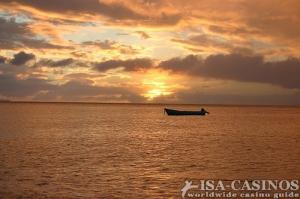
The temperature in Antigua rarely falls below 20 °C, and it is rare to need a pullover there, other than during the torrential, brief rain showers. From November to February the climate is at its most pleasant; after that it slowly becomes warmer and more humid. The period from June to November is called the “hurricane season”, because hurricanes are most likely in those months. The last severe storm swept across Antigua in 1999 and destroyed much on the island. It never snows, and winter is entirely unknown.
The East Caribbean dollar, affectionately called the “ICY dollar”, is Antigua’s official currency. Common credit cards are accepted in many places; often, however, the shops have to convert a sum into US dollars before the card is charged. You can also pay almost everywhere in US dollars, though the less favourable rate of 2.50 is usually applied. The EC dollar is also used on all the other islands of the eastern Caribbean, with the exception of the American (US dollar) and French (euro) islands.
History
The first inhabitants of Antigua were the Ciboney (“stone people”). They left hardly any traces, however. Traces are found only from the settlers who followed, the Arawaks, a fairly peaceful little people from South America who discovered the island for themselves some 2,000 years ago. Around the year 1200 they were driven out by the Caribs, a less peaceable tribe, also from South America. The Caribs preferred raids to permanent settlements and are said to have coined the name “Wadadli” for the island, which is still used today by the local beer brand.
Only 300 years after the Caribs took the island, visitors arrived from a still less peaceable group of people, the Europeans. Their leader was called Columbus and christened the island “Santa Maria la Antigua”, after a figure in the cathedral of Seville. It took some 150 years, however, before the Spanish, English and Portuguese managed to establish a settlement that was not immediately razed to the ground by the Caribs. This English settlement was founded in 1632 in the south of the island, at a place that is now called “Old Road”. Apart from a few months in 1666 and 1667, the island remained firmly in English hands from then until its independence in 1981.
After initial attempts at producing tobacco met with only moderate success, everything was geared towards growing sugar cane. A large number of slaves were imported from Africa to run the farms. On 1 August 1834 the slaves were formally made free people, but most of them returned – now as “free workers” – to their previous places of work. Some, however, also moved into new villages of their own; places such as “Liberta”, “Freetown” or “Freemans Village” still recall this today. In the nineteenth century the value of West Indian sugar fell steadily, because the main buyers had other, cheaper sources. Land ownership became ever more concentrated in a few hands, and by the mid-1940s almost all the fertile land belonged to a single company.
During the Second World War, Antigua was strongly influenced by the large number of American soldiers stationed there. Many Antiguans were able to work for the Americans and received considerably higher wages than they could have earned in agriculture. In this way they also often acquired practical trade skills, which proved quite useful after the Americans left. Sugar production continued to decline and by 1972 had been replaced entirely by other agricultural activities such as growing fruit and cotton, and livestock farming. Today an estimated fewer than five per cent of the population still work in agriculture.
Vere Cornwall Bird was the dominant figure on the political scene from 1943, when he was elected president of the Trade and Labour Union. He led Antigua through the various stages of independence to full statehood on 1 November 1981. In 1994 he resigned as prime minister, and his son Lester Bird succeeded him in office. V. C. Bird died in 1999; he was presumably the only national hero Antigua ever had. His name crops up again and again, first of all when you arrive by air: the airport is called “V. C. Bird International”.
Jobs in gambling
Living for a while on a Caribbean island in order to work there sounds tempting and is certainly worth an adventure for some. You will almost certainly not get rich doing so (the ratio of income to cost of living is better in the USA and most European countries), but you can still have fun and, depending on how long you stay and which country you come from, save a little tax. There is a wide range of possible fields of activity, for example tourism, gambling and skilled trades. Of course it is a great help to know someone in Antigua who can make the necessary contacts, obtain a work permit and take care of similar matters.
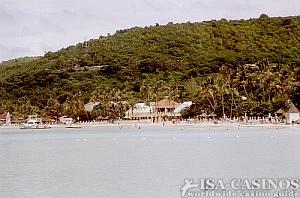
ISA-CASINOS heard of one example from “Lore (42)”, an Austrian woman who works on the spot as a call assistant for an Austrian sports betting company. She said:
“I have been in Antigua since 1991 and have worked here. Originally I worked in America as a manager, but I had to leave the country because I did not leave after six months but only after eight – and I ended up in Antigua. I have been here ever since and work here too. Every six months, though, I have to leave the island for a day and enter again afresh. The rules are just as strict as in America. Then my employment begins anew each time.”
Asked whether she did not feel drawn back home, the answer was clear: “No, never. I keep going back to Austria to visit, but the rush and all the fuss around it are no longer for me. I will probably stay here for ever. I have my steady job, even if interrupted, and I have everything I need. Even if the company no longer needed me, I would immediately find another position in this field, because skilled staff who speak German are always wanted.”
Short-term employment or permanent post?
On the island there are different working conditions and ways of proceeding. On the one hand there are employees who are not hired permanently. Others are hired on a permanent basis and are therefore subject to the tough employment rules, which companies must observe strictly. Some online casinos and sports betting providers get around this with fixed-term contracts. We asked Giancarlo Bettini of Global Player about this; in his interview he readily gave us information and laid out the details.
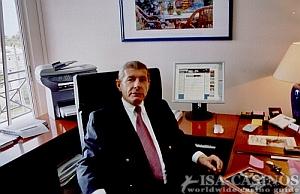
“Before hiring a foreign employee, every company here must submit a request to the Ministry of Economic Affairs. The company must state in detail the reasons why a local cannot do the job of programmer, telephone operator, call-centre employee and so on. In addition it must advertise twice in the local daily newspaper and deal with all enquiries received. Only then can an application be made. The application describes the person one wants from abroad, and all documents are enclosed. Once all the approvals of the Ministry of Economic Affairs are in place, the person can enter the country and receives his work and residence permit. Once he has arrived, he must report to the Ministry of Labour and receives his work permit. This expires immediately, however, if the company gives notice. After that the employee must leave the island without delay. It is impossible to change employer immediately, because the new employer must go through the same procedure, and only then can the employee enter again. If, however, you work on the island for more than seven years, you receive an unlimited work permit, can stay and can then also change employer at any time.
Many people elsewhere in Europe have no idea how strict the requirements are here on the island even when it comes to dismissing an employee. That is why some companies also offer jobs on a short-term basis. If an employee works for more than ten years in a company, he cannot simply be dismissed. After as little as seven years he has special protection here on the island. In the event of dismissal, you must grant and pay him one month’s notice protection for each year he has worked for you, plus one paid day of leave per month. You must also bear any costs of moving house, so that he is in no way a burden on the state. Some companies now get around this with six-month contracts, which is of course not reputable and is rather rare, since good staff who want to stay here are in short supply.”
There are certainly also some quirky stories that the locals like to tell each other, such as that of a Swedish sports betting provider: he came to Antigua, saw the beautiful sugar mills and decided on the spur of the moment to set up his offices in one of them. The company immediately converted one of the sugar mills into a modern office. The licence was applied for on the side, and the building work was in full swing. When all the building work was finished, the licence approval had still not arrived. At some point the Swedish bookmaker ran out of money, since he was not allowed to run his business, and the company left the island again. Today nobody remembers the provider’s name, but a former sugar mill is proudly shown off as a finished office building.
As Lester Bird, the former prime minister, told us in an interview, the online casinos created 5,000 jobs in Antigua. “At present roughly two to three thousand people work in this industry. At peak times it was five thousand. With our small population, it is remarkable how much money was generated.”
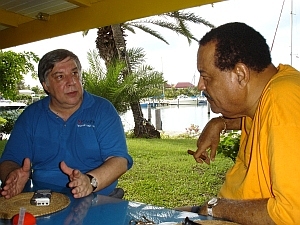
What made Antigua famous
What made Antigua famous, and what is chiefly associated with the name? It is, quite plainly, gambling that put the island at the centre of the world. This does not refer, however, to the two casinos that still exist, which in this form would not be sustainable in any other country.
The “Kings Casino” in the middle of town is an outdated casino with gaming equipment from the 1980s and 1990s. The tables are no longer presentable, and the staff do their job because they have to – not a trace of friendliness. The best thing is simply to play, not talk, and not be surprised if the croupiers are pleased when you lose. Stakes are limited: at roulette you can bet a maximum of 10 US dollars on a single number, and the game is played in addition with the double zero. You may only play with hard US currency and not with the local “ICY dollar”. During the day tourists stream in by the crowd, arriving by boat, buying out the adjoining supermarket with its cheap goods and then going to the casino to gamble. In the evening only a few locals are to be found there, of whom insiders claim gleefully: “They are just waiting for the so-called jackpots to fall by themselves, without their having to place a stake for it.”
It was also interesting to find out on the spot how the croupiers are paid. After ISA-CASINOS had staked 100 dollars at roulette in order to get into conversation with the croupiers, which proved pointless, the pit boss in charge paid out the croupier’s commission (30 “ICY” dollars) before our eyes immediately after those 100 dollars were lost; the croupier left at once with a cheerful grin and closed the table. The next croupier was immediately ready, looked us up and down and pointed at the wheel, perhaps to start a new game.
ISA-CASINOS then enquired which other casinos operate on the island and where they are. We were told that a newer and more luxurious casino was located in Jolly Harbour, not comparable with this one. The third casino on the island, however, had been closed because the operators could no longer pay their electricity bills and nobody had taken it over since. This version was confirmed from all sides. Unfortunately, for lack of time, there was no opportunity to visit the casino in Jolly Harbour; this will certainly be made up for.
The online casinos of Antigua
Online casinos are what one associates with the name Antigua. It is easy enough to find out where they are housed and where their offices or buildings stand. It is harder, by contrast, to find contacts willing to talk and give background information. Some operators would not even let ISA-CASINOS in; others refused to comment on their companies. It must be said, however, that the research schedule was short and that ISA-CASINOS will certainly be back on the spot to question the contacts it has built up more specifically and to secure firm visits. This has already been promised.
But there were also other companies that let us look into their offices and allowed us to take photographs and ask questions. The former prime minister Lester Bird also invited ISA-CASINOS to a private conversation and answered openly all questions about the offshore companies and their online casinos and sports betting. We also received support from the honorary consul of Colombia, who received us in her home and answered our questions. Giancarlo Bettini, Chief Executive Officer of UNIVERSAL GAMING CONCEPTS INC. (Global Player), opened all the rooms to us on site and let us speak with employees and technicians.
Licences, fees, controls and the money laundering law
That Antigua is one of the best-known addresses for online casinos in the media is probably undisputed. Whereas at the start of the Lester Bird era there were still more than 148 licensed online casinos, today there are only about 50 operators. It was interesting to find out what a licence costs today compared with before, and what one has to observe in order to obtain it.
Under the old government of Lester Bird, the licence cost 100,000 dollars a year for an online casino and 75,000 dollars for a sports betting portal. The new government has changed this: for a licence (internet casino) one now pays 75,000 dollars a year and for a “sportsbook” only 50,000 dollars. On top of this come registration fees and annual basic fees of 5,000 dollars.
Of particular importance to our readers is the question of what the government’s controls of online casinos look like. On this we were able to speak openly with Giancarlo Bettini, licence holder and operator of the Global Player casino:
“If there are no sensational events, you have no controls to fear, but when you apply for the licence, the government is entitled to exercise its control. Fifty people can then come and take the office apart, and you cannot defend yourself against it. That has already happened. If the government has the slightest suspicion that abuse has occurred in any way, they act immediately, and then you never get rid of the supervisory authority again. They then come regularly, at unannounced times.”
Many people do not know that the government of Antigua has decided that anyone who lives in Antigua, whether permanently or as a tourist, can go into a public casino and play without limit, insofar as these local casinos permit it. Conversely, nobody in Antigua may play in an online casino – neither the tourist nor the local. The access points are all blocked, and if an online casino nevertheless allows access and is caught through the data, the licence is gone and will not be issued again. This is a safety provision built in to protect the locals. All online casinos and sports betting are offered through a single server by a provider from the company Cable & Wireless. This company only activates the server once a legally valid Antigua licence is in place.
A subject much discussed worldwide is the money laundering law. Everywhere, suspicions and fears are voiced that money in any amount can be laundered through online casinos and that millions are being shifted back and forth here. ISA-CASINOS confronted Giancarlo Bettini with this serious matter:
“That is all nonsense. I am happy to give you a typical example that is easy to follow: a player would send a larger sum in cash via Western Union and instruct us to go to the bank and set up an account so that he could then play with this money. The bank would laugh at us immediately and would not accept the money at all without proof. It knows straight away that we are an online casino and have nothing at all to do with cash. Everything goes only through credit cards and paycards, so that the bank always has proof of where and from whom the money comes and how high the limit on his credit card is. This credit is in turn granted by the bank the customer is with, and so it can be proved where the player’s money comes from. A proper offshore bank may no longer accept cash at all, but works only with transfers.”
The “black box” and the tax
What was not made public were the mishaps that occurred in advance of the introduction of the tax. An industry insider who owns and offers several server slots for online casinos told ISA-CASINOS: a minister had heard of an Australian company that had developed a kind of “black box”. All online casinos were to be connected to this “box” so that the authorities could see what these casinos were doing and what they were earning. So the government concluded a contract with this Australian company. The whole thing was to cost 350,000 US dollars. In the ministries, however, nobody had thought that the casinos on the island all use different systems. Some had systems from Boss Media or Microgaming. In addition there are dozens of small companies that offer such software and whose software is also used. Connecting these different systems to a “black box” proved impossible to implement. Once this was discovered, the chaos was complete. The Australians, who had not been informed about these different systems, insisted on receiving their money – and they were paid. The government wanted to avoid a row in this way, and it was not to become public in the press.
Only after the attempt with the “black box” had failed was a tax of 3 per cent per quarter introduced. It was assessed, however, in such a way that the calculation of profit meant the tax was often 17 or even 20 per cent. As a result many casinos left the country and went to Kahnawake, Belize, Curaçao, Costa Rica or Guatemala. Boss Media was very large and had 13 or 14 casinos running under its name. These casinos were the first to be withdrawn. That drew others after them. Nevertheless, gambling remains one of Antigua’s biggest sources of income and can no longer be imagined away economically.
The case against the USA before the WTO
On the island, the case against the USA before the WTO is of course always a topic of conversation. Antigua won the case at first instance. America then had the option of appealing, which it did on 7 January 2005. Most providers are confident that America will lose this case again in about five months. In substance it concerns whether American citizens may play in the online casinos of Antigua and the surrounding islands. An operator of sports betting and online casinos, asked what it would mean for Antigua and the offshore casinos if the appeal hearing were also won:
“The Americans would then no longer be allowed to block us, which means the casinos could also be legally visited from the States, and they would have to recognise that. Conversely, of course, they would also have the possibility of offering something like that. I simply have the feeling that the Americans are quarrelling with the small island state of Antigua because they do not like the fact that we have American players and that the tax on winnings escapes them.”
It is also interesting that the Isle of Man has in the meantime changed its casino rules. That gambling is now also to be allowed for US citizens on the Atlantic island could prove very significant economically. For of the roughly 7.6 billion dollars lost each year in online betting, about half is accounted for by American gamblers, even though taking part in these games is strictly forbidden. Should the ruling therefore stand as expected, the island states bringing the suit, at least, may give US citizens access to their online casinos. And others – as the case of the Isle of Man now shows – evidently do not intend to leave the whole business to Antigua and Barbuda without a fight.
Turnover and player numbers
ISA-CASINOS asked an operator (whose name is known to the editors) how much turnover an online casino makes on average, whether one can reckon with figures, and whether figures may be named at all:
“Nobody will ever make figures public, that is logical, and not only because of taxes. These are simply things one does not pass on. We do not really know them from our best friends either – we do not ask, they do not ask … I would put it this way: it is a very lucrative business. Of course you also have to make sure you have the right clientele. In the long run this business is lucrative only if you run it cleanly. Anyone who does not can shut down straight away. Online casinos cannot possibly aim to fleece their users in any way, because that would ruin their name. If someone wins in a normal casino, he also goes to the cashier and gets his winnings paid out; online it is no different. And if that does not work, the reputation is quickly ruined. Online casinos have varying numbers of players. It is hard to name figures, though. I would say that the small providers have about 100,000 and the big ones up to 3 million players. But you must not forget that these are the numbers of accounts – a player can, after all, have ten accounts. I estimate that slightly over 50 per cent of the accounts comes closer to the number of players.”
Online casinos and money laundering businesses are probably what one associates with the name Antigua. This question is answered indignantly by everyone, who speak of pure slander by the media and press. On this, Giancarlo Bettini: “That is all nonsense. We are not allowed to carry out cash transactions, all bookings take place electronically and are traceable in case of doubt. In any case, online casinos are among the most strictly controlled trades there are and are about as poorly suited to money laundering as can be.”
Conversation with the honorary consul of Colombia
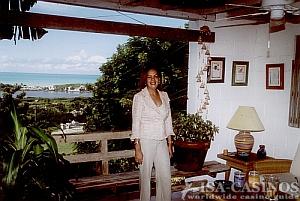
During our research on the island we also met the honorary consul Maria Consuelo Britto from Colombia. She spontaneously invited ISA-CASINOS to her home when she heard of our research and gave us a short interview.
Reinhold Schmitt: Could you please give us a short introduction to yourself: your home country, your profession, since when you have been consul?
Honorary Consul Britto: My name is Maria Consuelo Britto. I come from Valledupar, a city on the north coast of Colombia, and I am 41 years old. I studied communication science and journalism at Xavier University in Bogotá, the capital of Colombia, and graduated. I also studied at Tulane University in New Orleans. I have been appointed honorary consul since 1999.
Reinhold Schmitt: Are there casinos in your country? If so, where?
Honorary Consul Britto: In Colombia there are casinos in all the larger cities, mainly in Bogotá, Medellín, Cartagena, Barranquilla and Santa Marta.
Reinhold Schmitt: Are these casinos controlled by the state or by private organisations?
Honorary Consul Britto: These casinos are privately run and subject to the regulations and taxation of the government.
Reinhold Schmitt: Who issues the licences for these casinos?
Honorary Consul Britto: The government.
Where the online casinos on Antigua are located
Where are the online casinos located in Antigua? How are they housed? Who gave us information and who shut the door in our faces? What role do the credit card companies still play in this business?
In total, just under 50 online casinos and sports betting operators are still on the island.
Many internet casinos point out that they hold a government licence. Such licences are issued, for example, besides the Netherlands Antilles, by Antigua, Curaçao, Venezuela, Liberia, Costa Rica or the Republic of Dominica.
In Antigua, for example, the requirement for obtaining a licence is an annual payment of 75,000 dollars to the local regulatory authority, plus fees of 5,000 dollars plus lawyers' and notaries' costs.
The credit card companies
While only a few years ago the credit card companies made a fortune, this business was restricted at individual companies under American pressure.
American Express withdrew from this business completely in January 2000. At present only Mastercard, Visa and Delta are still involved in this lucrative market.
PayPal, Moneybook and prepaid providers have also stopped this business in the meantime. PayPal was taken over by eBay. eBay ended the gaming business under pressure from American senators. As this turnover amounted to only 3 % of eBay's, there was no question for the company of giving up this gaming business. Especially as it did not necessarily want to fall out with the American government. How lucrative the market for such means of payment is, however, is shown by the total turnover, which is around 4 to 6 billion dollars.
Mastercard has also changed its conditions in the meantime. Because of the money laundering law it is no longer possible to book winnings back onto an amount debited from a credit card. This amount has to be shown and paid separately. Visa is considering introducing the same conditions as Mastercard.
Some online casinos have already reacted to this business policy of the credit card companies.
They use the so-called “Authorize and Settle”. For the players an additional incentive and service. It simplifies the payment process. The customer pays in 100 dollars, which are booked to an interim account. This money stays there for up to five days and – provided the player has not won – is charged to his credit card. If the player wins, the difference is paid out. Both parties thus save transfer costs, which are considerable given the number of players, especially as the online casinos usually pay them. In addition, the companies get the chance to check more specifically whether the card has been stolen. In such a case everything can be frozen and reported. Mainly, however, this project is about saving costs.
A warehouse instead of a glittering façade
Most online casinos are housed in office buildings, but some can only be found by searching carefully.
Small business signs indicate that an online casino company is located here. Fancy “frills” are dispensed with, especially as the offices – marketing and support – are housed above a supermarket for home and office supplies or in plain buildings. Many have no company sign and no letterbox that would suggest the existence of the casino company. As there is no passing trade, a grand façade is not needed.
What often looks elegant on the internet looks rather shabby in reality:
The DrHo.com branch on Antigua is located in a large warehouse next to the power station. Antigua does provide land to foreign companies, but there are no office buildings in the free trade zone created especially for this purpose.
So companies move in wherever there is still room. Through special regulations, the government of Antigua and Barbuda allowed online casino operators to run their business outside the free trade zone (nobody opened the door when ISA-CASINOS visited).
Closed doors
Casino-on-Net also operates under a licence from the government of Antigua and is supervised by the Antigua Gaming Board. Casino-on-Net is run by Cassava Enterprises Ltd., a duly registered company based in Antigua. Behind the company is said to be an English businessman who commissioned two Israeli brothers to run an online casino. They have been on the market since 1996 and describe themselves as the largest online casino in the world. After Antigua decided to levy taxes, the company partly moved to Gibraltar. According to rumours going around the island, however, there are said to be many problems. One of the main reasons is said to be “problems with the local employees”. Casino-on-Net is very ramified and nobody knows exactly how many casinos really belong to it. Nobody could give us information about its exact structures and size. Two former employees merely told ISA-CASINOS that they were only allowed to know what they needed for their job (a conversation was not possible here either).
The same happened during a visit to the company Intertops, despite an appointment. Here I was told politely that no conversations with foreign journalists were wanted. When I pointed out that I had an appointment, I was told that this had been a mistake. Then the door closed and the nice lady disappeared.
Benjamin Kuhlmann, who comes from the Metro family, ran a Gamebookers in Jasmine Court (with further branches in Austria and Ireland). They were founded by Bet On Sports, who are now located in Costa Rica.
The Bencorb Building houses WWTS, a sportsbook. The owner is Billy Scott, who is said to run a whole lot of other casinos as well. In total this company employs around 160 people. But nobody wanted to give more detailed information about this.
The Woods Centre is home to the Epicurean, the largest supermarket on the island. Playtech & Co., a software provider for online casinos, is also housed there. This software is used, for example, by the casino Mapau.de. Although announced, nobody was willing to talk: the manager Richard Drent (Sunny Group) had been informed by ISA-CASINOS that we would be in Antigua, but nobody opened the door. Everything was darkened and only a sign could be seen on the door, referring to Enet Marketing, who work for online casinos.
At the company World Gaming there was no conversation either. Nobody was willing to answer questions.
Boss Media is the best-known company in this sector. The Swedish company, which among other things also sells software products and is listed on the stock exchange, had originally registered about 14 online casinos on the island. Most of them moved to other islands after the tax announcement.
Who is World Gaming plc?
According to its own information, World Gaming plc is the technology and world market leader in the online gambling software market. However, the company has a turbulent history behind it and has only been in a turnaround for a few months. The company develops software for online providers of casino games, sports betting and lotteries. These are made available in return for licence fees. The business model is based on World Gaming receiving a one-off fee for the use of its software and, in return for maintaining the software and guaranteeing its functionality, additionally sharing in the licensees' turnover. With rising turnover, these additional revenues are generally not offset by proportional cost increases, so that both with the growth in the number of licensees and with the growth in turnover of the individual licensees, margins rise and economies of scale can be realised. At present there are 15 licensees who, together with sub-licensees, operate about 200 websites with World Gaming software.
The Ritz Club Online
An interesting exception from Europe is likely to be the Ritz Club Online, which has held a licence from the Netherlands Antilles since 2002. The gaming software, on the other hand, is licensed in Curaçao.
The special feature here is that (ostensibly) a real casino in the heart of London (Piccadilly) stands behind the internet offer. The Ritz Club was founded in 1978 in the former ballroom of the famous Ritz Hotel as a private, exclusive members' club and since then has offered casino games in its rooms, among others at 7 roulette tables and 6 blackjack tables. The Ritz Club attaches great importance to its rich and famous members and to its good reputation regarding the propriety of its gaming offer.
What makes a proper casino – its respectability – is being transferred to the online casino. It is expressly pointed out that it is not supervised by the English gaming authorities but holds a licence from the Netherlands Antilles.
Servers, conclusion and outlook
The largest provider of servers and hosting in Antigua is the company Cable & Wireless, the telecom headquarters in Antigua. There, in computer rooms monitored by cameras, are the servers of various online casino operators.
There are certainly many more online casinos on site, but unfortunately it was not possible to deal with all of them in this short time.
All in all, the claim is true that Antigua is one of the best-known hubs for offshore companies.
How far liberalisation in Europe will now develop remains to be seen. In England and on the Isle of Man this has practically already happened. How long the state monopolies can still keep their sovereignty will be shown by the future and the legislative process. Until then, Antigua will remain the island of online casinos par excellence.
Sources
The facts were checked against the following sources:
- CIA World Factbook, Antigua and Barbuda (Antigua 280 km², Barbuda 161 km², independence on 1 November 1981): https://www.cia.gov/the-world-factbook/about/archives/2022/countries/antigua-and-barbuda
- New World Encyclopedia, Antigua and Barbuda (English settlement in 1632, abolition of slavery in 1834): https://newworldencyclopedia.org/entry/Antigua_and_Barbuda
- Wikipedia, List of prime ministers of Antigua and Barbuda (Vere Bird 1981 to 1994, Lester Bird 1994 to 2004): https://en.wikipedia.org/wiki/List_of_prime_ministers_of_Antigua_and_Barbuda
- Office of the United States Trade Representative (USTR), WTO dispute DS285 (panel report of 10 November 2004, appeal by the United States on 7 January 2005): https://ustr.gov/issue-areas/enforcement/dispute-settlement-proceedings/wto-dispute-settlement/measures-affecting-cr
- PayPal stopped processing payments for online gambling after its takeover by eBay in 2002: https://en.wikipedia.org/wiki/PayPal
- Casino-on-Net and Cassava Enterprises (today 888 Holdings, based in Gibraltar): https://en.wikipedia.org/wiki/888_Holdings
- Boss Media, Swedish software maker for online casinos: https://en.wikipedia.org/wiki/Boss_Media
- The details about licences, fees, taxes and the numbers of operators and players, as well as the statements of the people interviewed, come from the author’s on-site research and conversations and can no longer be independently verified today.